Showing posts with label Gerald Simpson. Show all posts

Saturday, May 11, 2024

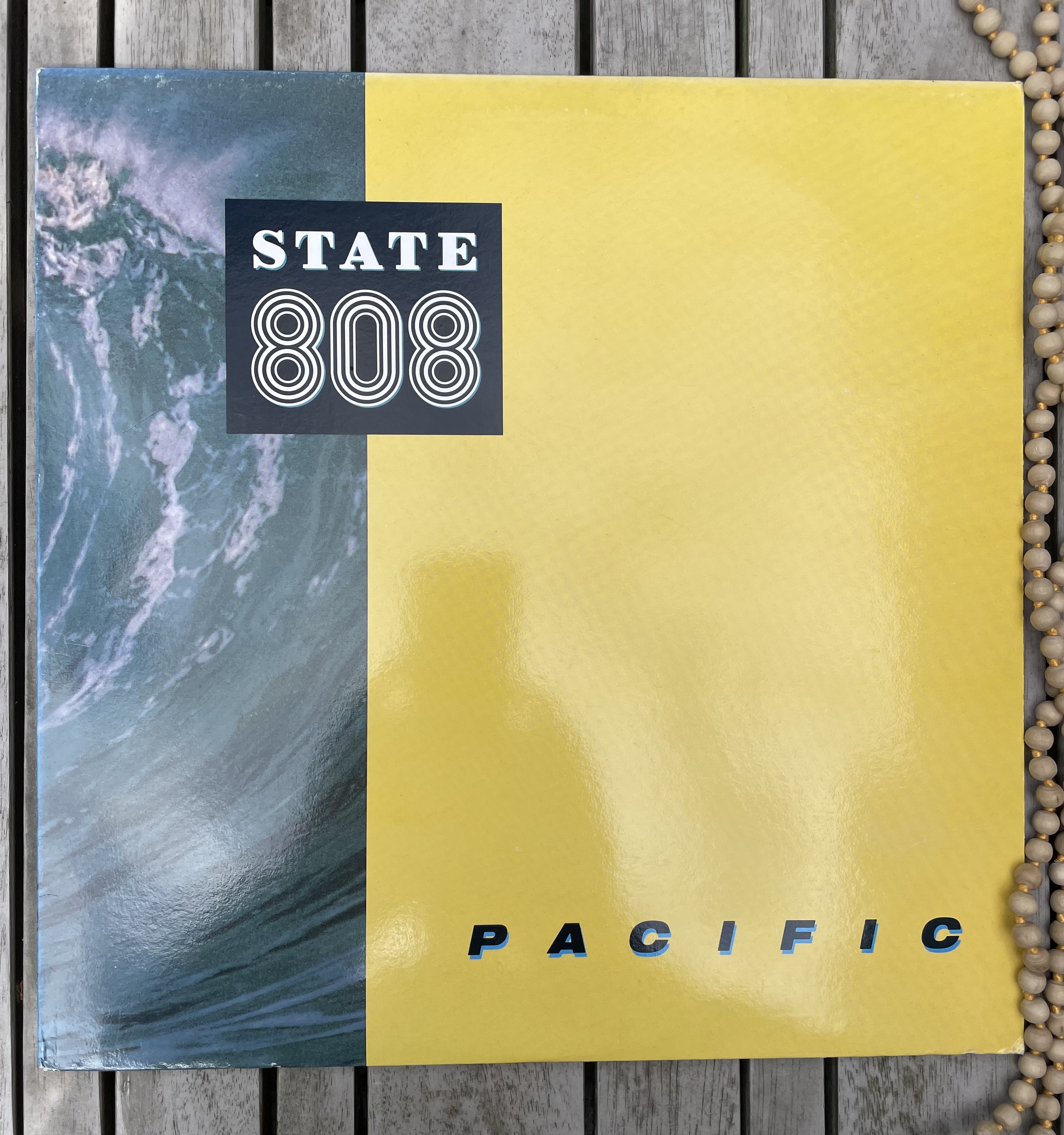
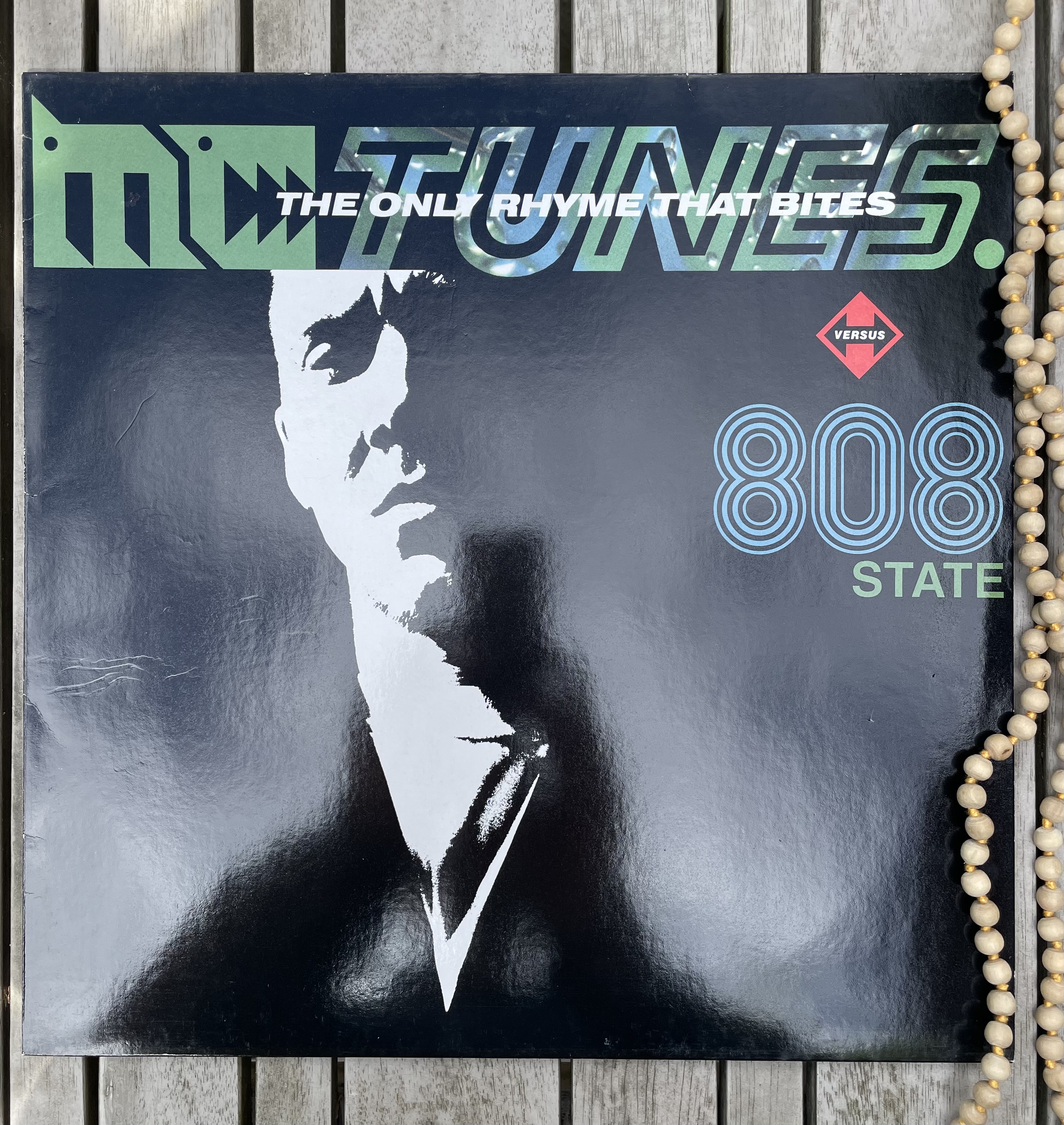
Prebuild, Pacific, Quadrastate - the Look of 808


For me, “Prebuild” is not an album that you would play to your new girlfriend on the first date, nor on the second, I think. Unless you met at a rave.

Released 15 years after “Newbuild” on Rephlex as a double vinyl, it is the prequel to Newbuild. Even rougher, even more unpolished. In terms of sound, it would actually be a tape only release.

Not a must have release, but also contains some pretty crazy, good acid tracks.

For me, “Massagerama” is the track you could put on on your third date without being asked to stop the music. Then you could switch to “Quadrastate”, which sounds completely different, more melodic and already contains a lot of “Ninety” and THE hit “Pacific”.

I've always been someone for whom the design of a record is just as important as the sound itself. If there were consistent concepts for all products, color design, layout and font types, I was often lost & could definitely buy records, just after look.

808 State had such a concept in their early phase, which they then unfortunately abandoned.

The “Ninety” album inexplicably doesn’t have that wonderful double 808, even though it’s from that era. With “Ex:el” this 808 was reduced to a fingertip width, only to disappear completely with “Gorgeous“. By this album at the latest, my love was only affection. But the music of the first years will always remain, even if it has a Gerald Simpson flavor (see penultimate post).


It takes Rephlex to dig up one of the classic albums of the year. 808 States Prebuild is compiled from tapes taken from before their seminal first release Newbuild. 

The first track Automatic sounds just like A Guy Called Gerald stuff from the same era. Ride isn't bad and neither is Johnnycab although Ride is the weaker track of the two. 

The two Lounge Jays tracks sound more like US house tracks especially Sex Mechanic with that overdriven sample and seedy 303 bassline. 

Clonezone and Cosacosa are two great acid tracks and its a shame that they end suddenly after just five minutes or so. 

The real highlights of course are at the end of the album. K.Narcosa which later surfaced on Newbuild and C.I.S which is just insane. The last track Thermo Kings is taken from a rave held at a Swimming Baths in Manchester and is one of my favourite acid tracks. Sounding like Phutures Acid tracks mixed with Xrays Lets Lets Dance, its 14 minutes of acid that rival anything the U.S produced at that time.

  • Fronhornet -


As a group which mainly specialized in a hybrid of house and techno music, 808 State was, at least in its first half-decade, highly enigmatic. After the band's first release, the tracky, deep acid house collection Newbuild, 808 State avoided the clichés of each genre, and consequently never produced anything that fit comfortably into those styles, or into any others, for that matter. When the products of this labor were coherent, evocative songs that morphed, unfolded, and refolded upon themselves like self-aware works of sonic origami, any unfamiliar aesthetics in them were easy to regard as sheer creativity, examples of a higher order of synthesized dance music. Sometimes though, the results were churning, bombastic messes of percussion and melody working in competition rather than harmony, leading the listener to wonder if a techno band ever need consist of more than two or three people.


The ability of the group to straddle this artistic boundary, erring just on the side of creativity, is perhaps never more apparent than in Quadrastate, a 5½-track mini-album released in 1989. It was a stark departure from Newbuild, instead opening with loon calls, melodic synthesized pads, and of all things, a saxophone solo. Ordinarily, none of those things would bode well, but with the addition of a battery of clever drum programs, a manic bassline, and a suspenseful breakdown, the lead track, "Pacific State", was an instant classic played by every forward-thinking house DJ, and then some. Licensed by ZTT, mildly remixed and released as just "Pacific", the song was a UK Top 10 pop hit.


The rest of Quadrastate was further left-of-center, a set of densely arranged, not-so-radio-friendly material more for the DJs and collectors, but no less adventurous or melodic than "Pacific". The hopping, skipping "Disco State" is almost fully techno, but is built on disco-style octave basslines and seems to be a favorite of my friends despite being the weakest song on the release for me. The strongest track for me is "Fire Cracker", a tune which dramatically emulates its title with every instrument while somehow remaining both listenable and danceable, an astonishing feat still unrivaled two decades later. The repetitive "State Ritual" alternates an ultra-hypnotic casade of staccato flute samples and multiple rolling, roiling basslines against incessantly hammering drum programs, easily earning the title of the busiest, noisiest proto-trance track of its day. "State To State" is an uplifting, anthemic epilogue reminiscent of "State Ritual". By the end, one wants to hear it all over again.“

  • MJB -


 „After interviewing both names involved in 'Pacific State's production, Gerald Simpson & Graham Massey, here's a unique vision you will have from the days this timeless Classic, back from the end Eighties. 

According to Gerald Simpson's testimonials, when ‘Pacific State’ was conceived, there was no plan of doing any specific EP. It was meant to be a Peel Session. “I had already done ‘Emotions Electric’ for it, so I actually thought we would do one as 808 State, but it didn’t happen”. 

The original name of ‘Pacific State’ should be ‘Day Ride’. Gerald Simpson reveals how the programming was done: “It started with the strings - Roland D-50 and Roland S-10 to sample it, and the atmosphere came with Derrick May’s ‘Feel Surreal’ on my mind. The Bassline was SH-101 again, triggering the grimpshot from TR-909 to keep the time for the bass, and the 909 to the beats. The Balearic bird sound came from Graham Massey’s Korg machine, and the saxophone was Graham’s performance was only later, after the 1st demo.” The futuristic Space-Techno mentality from the Motor City represented, as he had said before, his biggest inspiration. “For me, the Music of Detroit was something I felt I should be a part of it, even more than Chicago House. Their Music was the perfect soundtrack for the squat I was living in at that time, very industrial, just like theirs. I never wanted to sound like English. The only stuff I was into was Baby Ford back in 88.”

After all, there was a spreading of lot of stuff around like a production-chain factory, over copied music formulas, which Gerald never agreed about. “I just follow my heart, just go after what I feel, I do not work based on the copy of the outside.” The same feeling was pursued from there on, as a main guide for his artistic life. “On the early nineties it seemed that there was no room to experiment furthermore, except for Breakbeats and Jungle”.

Graham Massey also remembered those magic days: ‘Pacific’ was very important in Manchester, at the Haçienda as well. They used to play as the last tune of the night! Such an important thing to us, much more important than being ‘Top Of The Pops’, Pacific was considered was considered a different perspective, just like “Chill Out” by the KLF. It was an ecstasy kind of anthem, at the same time futuristic, and human. The quality of it emotive atmospheres lead you to imaginary places. Roland 909 did the beats and the Roland 727 for the bongo percussive sounds. The basslines and synths were Roland SH-101, and the chords were sampled from the Roland D-50 (which was new synth from 1989) into a sampler to play as a sample, rather than keyboard. The first version there was just the chords and pianos, a lot of which used on tape edits. It wasn’t made in one day, but in three or four sessions of recording. The saxophone was a soprano which I played, like I used to on Biting Tongues. One night before, a friend of mine played a sax and left it and so I decided to experiment with it. It 

would help with the identity because the people could go to the shop ask “do you have the record with the birds and the saxophone?”, it made somehow an identity of it. It sounded like some Detroit with the flavor because of the chords, but we were also trying to make something like Marshall Jefferson’s “Open Your Eyes”, we tried to make that warm mood, that atmosphere."

  • Alan Patrick -


Friday, May 10, 2024

North : Dream 17


Well, I think I've bought a lot of albums over the course of my life so far, and 

for many of them I can no longer say when and where or why I bought certain albums. The majority of the early albums certainly had plays on the radio, especially the night broadcasts were helpful. At the beginning of the 90s, CDs began to play an increasingly important role, for me it was still cassettes and vinyl at the beginning of the 90s. A little bit later, I also had a CD player, tapes and vinyl initially lost their importance. Vinyl wasn't really gone, cassettes came back to me in the last few years.

The big record stores like WOM and Virgin had a CD playing station where you could listen to the stacks of CDs that you had previously searched for. However, you always had to ask an employee to swap the CDs. No problem if you had a direct hit. It was stupid when after a few notes it became clear that this was nonsense. Please swap again. Sorry.


An album that I can identify exactly, quite accurately in fact, is “North - the Sound of the Dance Underground”, on the then relatively new DeConstruction label. It was the first album that I bought in a very simple record store immediately after the fall of the Berlin Wall on November 10th, 1989, with my welcome money of 100 DM (which every GDR citizen got).

Since there was no internet back then and I hadn't read any music reviews, it was probably a blind buy, chosen based on the cover and the acid smiley on it. “Voodoo Ray” was probably also an argument. In addition to this classic, for me Annette with “Dream 17” is the hit on this compilation, which basically consists of tracks by Mike Pickering (Quando Quango, T-Coy, later M-People), A Certain Ratio people, and Gerald Simpson. Annette is also a collaboration between Simpson and T-Coy and “Dream 17” is the only track that was released with this composition.


Classic old school acid house track, with is bubbling acid hook, fantastic bass-line and almost haunting vocals which combined with the other elements gives a melodic and soulful vibe which really draws you in. Dream Slumber is also a great instrumental version. A real slice of quality house through and through that was a real anthem in the Hacienda.” -

John Marcus/Discogs -


Dream 17, also released as a single 12" and now pretty unaffordable on Discogs, here from the also very good compilation


 Richard Sen presents This Ain't Chicago - The Underground Sound Of UK House & Acid 1987 - 1991, released January 1, 2012


Wednesday, May 8, 2024

Newbuild


After the last post about A Guy called Gerald, something from 808 State just had to come here. The band he was a member of for that first album. Well, I don't know what the relationship with the band is like today, there were court hearings because of missing author credits for "Pacific State", the first 808 State hit, swipes and "Specific Hate".

Perhaps Gerald Simpson would prefer not to live next door to his old colleagues, even in a text about the past. But maybe it is just that: the past.

Gerald Simpson doesn't just stand only for “Voodoo Ray”. He delivered incredible albums. “Automanikk” is fantastic and the later jungle albums were simply different than others in this genre. His tracks have hardly aged at all, I personally prefer the years up to 1989/1991, simply because so much happened there musically and I certainly romanticize that time. His credits for 808 State are also well known, perhaps there was some satisfaction afterwards, also in the form of outstanding payments. Maybe there was the agreement with 808 State that it had with Rham! because of “Voodoo Ray” never existed. Gerald Simpson never got any money for “Voodoo Ray,” which seems incredible and impossible. This is my level of knowledge.

As far as I know, I actually read all the interviews and texts about AGCG, I have always perceived Mr. Simpson as a calm, reflected, emphatic, thoughtful artist who was happy to pass on his knowledge of the machines, his irritation to this time is absolutely understandable.

I first heard “Flow Coma”, of course, in one of Monika Dietl’s shows on SFB, in an exclusive Coldcut mix. A raw, wild, groovy acid piece. One of the two Coldcuts fades out briefly in the middle, chatters briefly about the piece, but rather loudly, and then cranks it up again. What is otherwise annoying comes across as completely effective here and has stuck in my ears in such a way that when I hear the piece without that voice, which is more the norm these days, I think something is missing. Wild, important acid album.


„“NEWBUILD" was made before computers dominated production. All the sounds on this album, bar a few, are triggered by the drum machine. This is why you can hear mistakes on the album as it was laid down live to two-track tape recorder. Incidentally, the master tape, long-since disintegrated, was nicked out of a skip from the back of the BBC, Manchester. It had been spliced and diced heavily enough to get binned, even before 808 got their hands on it.

The great thing about "NEWBUILD" now is that it hasn't been diminished by the passage of time. It's still dirty, cavernous, messy, full of mistakes and profoundly f***ed up - Acid house from a brief period before it all went loved-up, blissed-out, whatever. "NEWBUILD" is unhinged, genuinely lysergic, made all the more vivid by the overwhelming sense of optimism that a new music was being formed right here and right now. The tyranny of formula had not yet made its presence felt on the scene.“

  • Richard Hector-Jones -


„Newbuild is a testament to the band's stop- at- nothing enthusiasm for their music, and is also the guts and determination of fiercely independent music. The tape they recorded the album on was removed from a dumpster 'round the back of the Manchester studios of the BBC; it'd been thrown away because it had been cut and spliced so often that it no longer met the quality thresholds of BBC engineers. But these three Mancunian scallywags saw an essential resource and seized it.

And it's with this spirit that 808 State imbued their debut record. The instruments were crappy and severely dated (remember, this was 1988, and the vogue for the Roland TB303 was five years in the future). Simpson, Massey, and Price recognized that the acidic spikes and snarls of the 303 and the synthetic percussion of the Roland 808 were exact replicas of the sounds they heard in their mindspaces. The trio then recorded an album that, after more than ten years of technological progression, still kicks away every other attempt at the definitive acid house album. And I mean "album," not just a collection of individual tracks sequenced together.

Newbuild takes you on an excursion through the jacked up sounds of dendrites firing, quasars spinning, and the piezoelectric sounds of an electron mist. From the opener "Sync/Swim" through the body- tingling bass pulses of "Flow Coma" and the percussive frenzy of "Headhunters" to the closing tribal techno funk of "Compulsion," 808 State challenge your preconception of how music should be and prove just how damn funky three tearaways with a beat-up drum machine can be.“


  • Paul Cooper -


There used to be a time when Newbuild could be considered the ultimate in freaky shit stuff, and there have been rumors (actively supported by 808 State themselves) that the album was a huge influence on none other than Mr. Richard D. James. But look for user reviews these days, and many of them will express disappointment. «It's almost as if I camped out in a Casio forest», a guy complains on Amazon, and he's far from the only unlucky camper. In retrospect, Grand Historians of Elec­tronica usually throw out the required five-star patches, but the rest of the crowds have simply moved on, discarding the past in favor of more «relevant», instantly gratifying pleasures.


But somehow, it makes me a little sad, even if I am by no means a fan of machine loop music, and, normally, the slightest talk about «Acid House», which 808 State allegedly helped bring around into European public consciousness or both, makes me scream in terror and run to my Bessie Smith recordings. Because, loops and rhythms and obsolete recording technology aside, Newbuild is really an excellent musical album. And, furthermore, I do not quiteunderstand what all the fuss is about: to my untrained ears, Newbuild still sounds sufficiently modern. I've certain­ly heard Aphex Twin tracks that were far crappier from a straightforward sonic point of view.


What these three merry guys from Manchester (Graham Massey, Martin Price and Gerald Simp­son) are doing here is making house music from an alien standpoint, borrowing the basics, cros­sing them with an artistic mindset that is influenced both by the astral dreams of Tangerine Dream and the industrial nightmares of Nurse With Wound, and coming up with enough in­di­vi­dual ideas to make nearly each track a stand-out. Sure, they would probably work best as top-le­vel soundtracks for arcade games — but if you find that demeaning, you can choose «sonic equi­valents of looking out the window in a spaceship flying close to light speed». That's acid house for you all right, if you are really in need of labeling.


The album never relents or slows down: it is fourty minutes of pounding grooves, seven different landscapes that shift form and color, but never speed, lest you lose the proper momentum. And what they lack in the ability to program a real tricky rhythm or polyrhythm, they gain in the pure art of invention. 'Sync/Swim' is all based around the bizarre interaction between the funky (but al­so quite heavy-metallic) bassline and the cute (but dangerous!) synthy double-note chomp-chomp that may represent little alien battleships speeding past that window of yours in regular formation — or, in a microcosmic manner, batches of viruses speeding up and down your arteries. 'Flow Coma' is less heavy, but equally mind-blowing, a real delight to see these synth patterns flow into and out of one another, weaving harmoniously melodic psychedelic patterns. And so on. The on­ly thing I am not sold on are the vocal loop overdubs — their presence on 'Dr. Lowfruit' and especi­ally 'Compulsion' is grating and distracting.“


  • George Starostin / Only Solitaire -


https://www.discogs.com/master/25427-State-808-Newbuild


Tuesday, May 7, 2024

Trip City


When Trip City was released in 1989, there wasn't the slightest chance of getting hold of a copy.

Although the Berlin Wall had just fallen, I began to explore the record stores in the west of the city with a modest budget, but the method of choice was to make recordings from the radio for a while. Monika Dietl played “Voodoo Ray” in the SFB, of course, but also tracks like “Time waits for no Man” and “Rockin Ricky”. And at some point, not too long later, the albums “Automanikk” and “Hot Lemonade” were in the record cabinet. But on “Trip City,” I first came across Discogs, but everything was already there.

Almost 3 years ago, Velocity Press took pity and brought a new edition of the book onto the market. This time the music came not from tape, which would have been appealing, but from vinyl. “Valentines Theme” is an absolute hit here for me. A typical, groovy Gerald Simpson track as you know it from “Time waits…” or “Subscape”. You already know “FX” from the Automanikk album. In general, we're listening to A Guy called Gerald 1989. The album has fewer melodic moments than Automanikk, but has that AGCG sound from that time throughout. Put on Trip City and go back to back then. Feel free to read later the Book.   


In the summer of 1989, when Trip City was first released with a five track cassette EP by A Guy Called Gerald, there had been no other British novel like it. This was the down and dirty side of London nightclubs, dance music and the kind of hallucinogenic drug sub-culture that hadn't really been explored since Tom Wolfe's The Electric Kool-Aid Acid Test. Maybe this is why Trip City is still known as "The Acid House novel" and an underground literary landmark.

Over the decades, Trip City became shrouded in scandal and mystery. The original London book launch literally descended into a riot - shut-down by the Metropolitan Police.

Everyone from the makers of Raiders Of The Lost Ark through the director of Candyman tried to adapt the book into a movie - but imploded in the process. And the galleys of the 25th anniversary edition were destroyed in a fire, before they could even be proofed or printed.

Perhaps Trip City is uniquely summed-up by the original publisher, dearly departed sci-fi legend Brian Aldiss, who wrote of the novel: "In the vintage of Thomas De Quincey's Confessions Of An English Opium Eater - but smack up to date.

It's about a young man's descent into hell - a hell that looks very much like London."

- Velocity Press -


It was an overcast afternoon, early in 1989 when I went to visit A Guy Called Gerald at Moonraker Studios in Longsight, Manchester. The long bus ride felt quite strange. Plus for many people, the idea of a soundtrack for a novel was particularly absurd. I wanted to use the word 'visionary' myself. | wanted this process to be something that would kick the Trip City legend into overdrive, add a dense layer of atmosphere, like a smoke machine in a club - or at the very least make the story more accessible for the people who might read it... But, you have to imagine or cast your mind back to a time before electronic music was largely generated via software or complex apps. Drum machines and sequencers were the gold standard - or all there was. So, the early pioneers like Gerald Simpson were literally inventing a 'sound' that didn't totally exist, yet. More importantly, the kind of narrative multimedia you see every day now on Instagram hadn't been invented.

I must confess, I was a little sceptical at first when Gerald opened a few beat-up holdalls and started lifting out a weird collection of 808s, 303s and the like.

Still, he plugged them together like some mad genius and then literally conjured a soundtrack from thin air. I was staggered by his intuitive skill and virtuosity. I was energised by how he changed-up and dropped into different styles, without skipping a beat. From orchestral, through danceable, even the sombre power of Gregorian chants... He made a theme for the main character. A track emblematic of the

'Latin' club in my story. Then a longer piece that was allegedly inspired by the fictional designer drug, as depicted in the text. I wrote a few lines - which he used as lyrics - and five minutes later he called up a female vocalist and she was singing the Trip City theme. If you listen closely, it's Gerald's voice saying "you can feel the atmosphere - there is sound, everywhere..." on the Trip City title track.

Later on, a number of journalists came up with the idea that this music or soundtrack was created to listen to as you read the book. Somebody even said that the staccato writing of the novel is meant to emulate the 4/4 beat of Acid House. Maybe I even said that myself.

Thirty-plus years later, I would like to think that the soundtrack is important because it sets the story in a time and a place. It's an atmospheric companion piece that may well transport you back to those sweaty nights in a smoke-filled club when too many pills took hold. If it does - great. And if not, it doesn't really matter - because these are still terrific tunes that sound just as unique and emotive as when Gerald made them, all those years ago.

I remember back in the 80s, in my hometown, Tony Wilson (of Factory Records fame) was fond of calling Shaun Ryder the WB Yeats of his day. In that vein, whether or not I like to see myself in the canon of Anthony Burgess and Clockwork Orange - with these five tracks, AGCG feels very much like the Ludwig Van to my Alex DeLarge.

- Trevor Miller -


“I got the manuscript off Trevor, the book wasn’t out yet, I read bits of it and made music to go with what I’d read. I wouldn’t say I read the book and sound-tracked it. I read bits of the book which got me thinking and feeling and then went ahead and made the music. So, I’d have to say the book did influence the sounds. It’s what I was asked to do and I thought it was a really interesting concept and collaboration”


The music on the Trip City EP is relentless groove. There are no break downs or drops, just an undeniable dance beat, which goes on forever without any stops. The tracks coming out today mostly have break downs and build ups, drops and sections which show the crowd when to dance and what to do. It’s like wait for it, wait for it…..OK NOW!“

- Gerald Simpson -


https://www.discogs.com/release/19135738-A-Guy-Called-Gerald-Trip-City


Temple Ritual/Floating Jungle : Live at the Mystic Palace

  Two other noteworthy releases from the Wave Temples circle appeared on Spotted Locales last year; they navigate the same oceans Wave Templ...